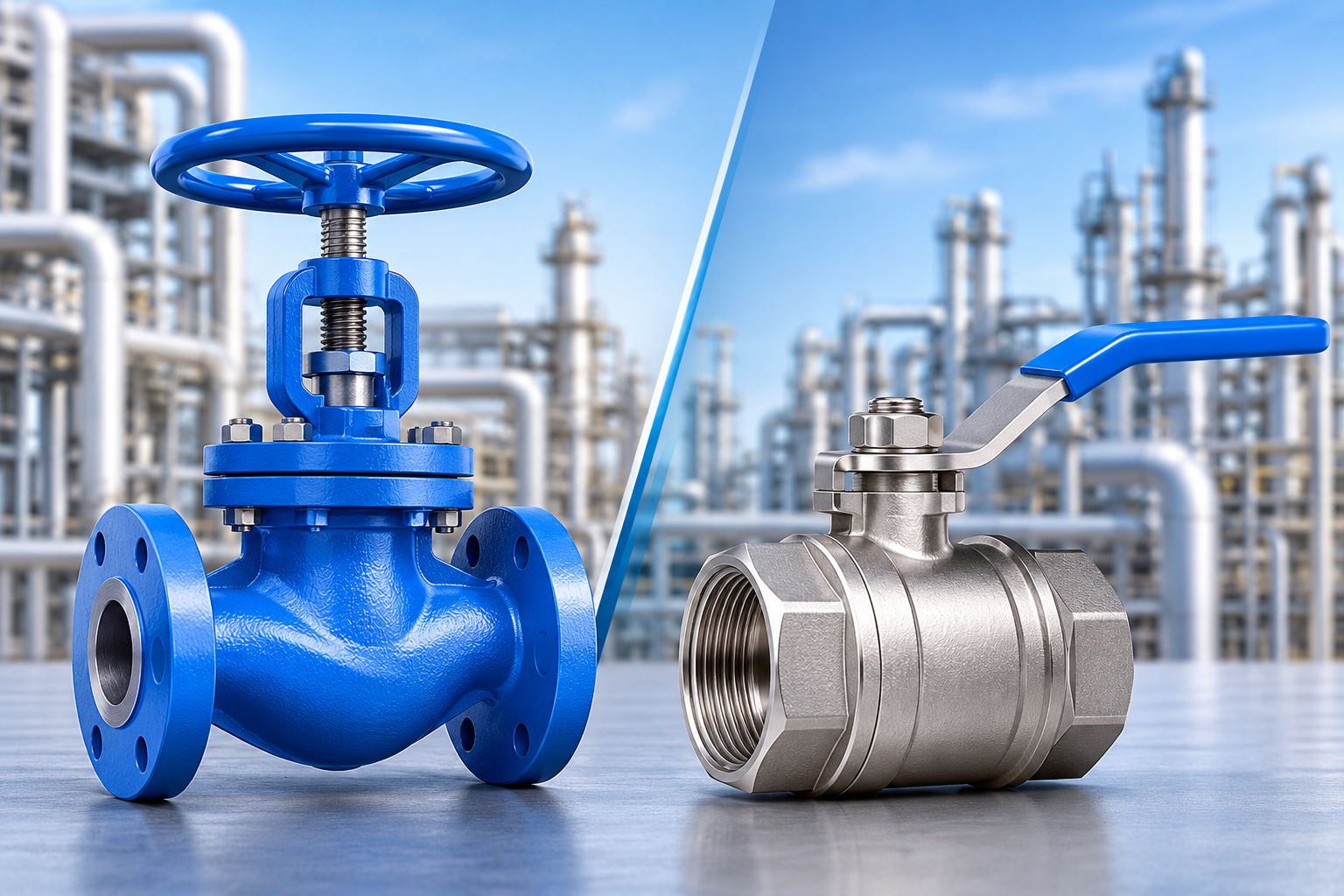
A trip in a pump can cause flow to reverse and create a loud bang in a pipeline. This impact can harm fittings, pumps and the whole pipeline. The check valve in the Saudi water networks, desalination plants, refineries and building services is the small part that prevents this problem. But selecting the wrong check valve can also create this problem. In this document, we discuss swing check valve vs lift check valve and their applications to give you the confidence in selecting the correct check valve. See deffrence between gate valve vs ball valve.
What Is a Check Valve?
A check valve permits flow one way and stops it from returning. It opens when fluid pressure causes it to be pushed against by the fluid’s forward flow. Once flow halts or starts to reverse, the check valve shuts on its own.
Industrial pipelines rely most on two types of check valves: swing and lift. These designs are, however, very different. These points guide the best spot and setup for every valve.
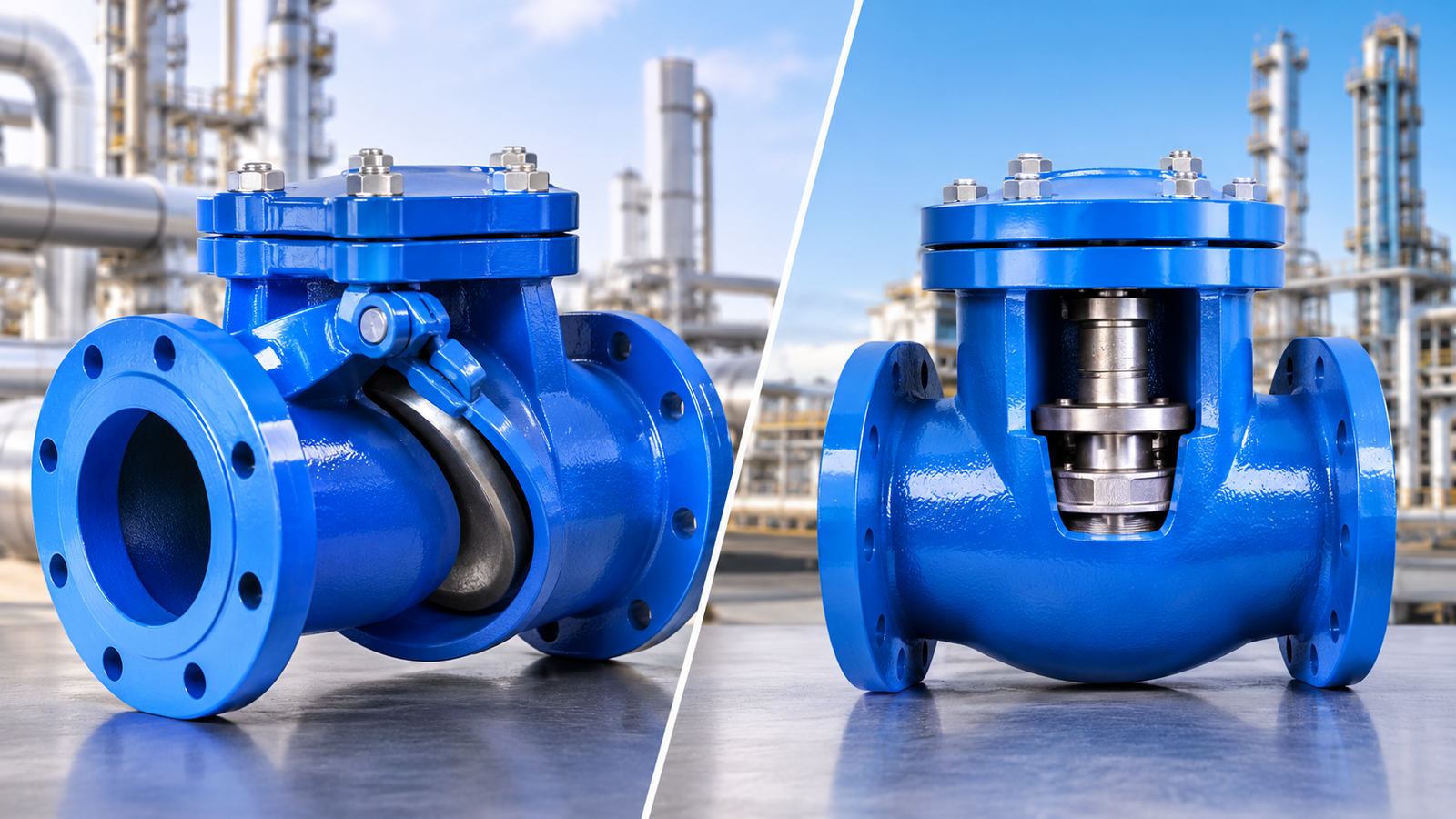
How a Swing Check Valve Works
Inside a swing check valve, a top-hinged disc moves just like a door. Forward flow pushes the disc open and swings it out of the way to give a wide, almost straight flow path.
As flow stops, gravity and the first push of backflow return the disc to its seat. Since the flow path is always open and smooth, very little resistance is presented and therefore this type of valve is preferred for larger water and pump discharge lines.
How a Lift Check Valve Works
The basic principle of a lift check valve working is simple. A disc or piston is located in a seat in the lower portion of a globular body. A forward flowing pressure lifts the disc, and a drop in pressure allows gravity or a spring to close the disc against the seat to seal the line.
The disc does not travel far, and therefore seals quickly and tightly. It is well suited for sealing small bore high pressure lines such as steam and air lines.
Swing Check Valve vs Lift Check Valve: Key Differences
The main difference between swing and lift check valve designs lies in how the disc moves and how that movement affects flow, installation and noise.
| Feature | Swing Check Valve | Lift Check Valve |
| Disc Movement | Swing on a hinge | Moves vertically up and down |
| Flow Resistance | Generally lower | Generally higher |
| Closing action | Typically slower | Often faster, depending on design |
| Water hammer risk | Can be higher during rapid flow reversal | Can be reduced with suitable design |
| Installation position | Level lines, or upright lines with rising flow, based on the model | Typically horizontal |
| Common applications | Water supply, wastewater, desalination plants | Steam system, industrial gas lines, high-pressure applications |
Installation Position (horizontal / vertical)
Swing check valves can work well with horizontal lines. On upright pipes, they only work properly with upward flow. downward flow, they work well with lift check valves which are also horizontal and vertical. Installing the valves in the correct direction of the pipe or the disc will not seal properly.
Pressure Drop and Flow Rate
A swing check valve has a wide and straight path, resulting in a low pressure loss. So it works best on large lines where loss of energy from pumping is a major concern. A lift check valve forces fluid to change direction, which adds resistance. This type of valve, however, has a better seal under high pressure.
Water Hammer and Noise
Water hammer strikes when a valve shuts too late and the backflow slams it closed. Swing disc check valves allow for a longer stroke and, therefore, can slam shut harder than other check valves. Lift check valves, which open from the bottom up, have a shorter stroke and, therefore, slam shut more quietly. A spring-assisted design can alleviate slam shut altogether and help protect the pump and piping system.
Choosing Between a Swing Check Valve and Lift Check Valve
Choose a swing check valve when:
- The line is large and carries water or other low-velocity fluid
- Low pressure drop is important for pumping efficiency
- The valve sits in a horizontal line or a vertical line with upward flow
Choose a lift check valve when:
- The line is small and carries steam, gas or high-pressure fluid
- Fast closing and quiet operation are needed
- The system has frequent flow changes or pump cycling
Keep in mind that lift check valves are more sensitive to dirt, so clean fluid or upstream strainers help them last longer.
Buy Check Valves in Saudi Arabia from Shamry Trading
Preventing backflow can save your pumps, piping and people from costly damage. As one of the leading valve distributors in Saudi Arabia, Shamry Trading provides swing check valves, lift check valves, piping and fittings for various industrial, commercial and oil and gas projects. Our team has the expertise to help you select the correct type, size and pressure class for each application.
We are committed to providing you with the best check valve for your application. Please contact us and provide the details for your upcoming project.
Conclusion
Swing check valves work well with low pressure drop in large water lines, and lift check valves close faster and seal tighter in high pressure, small line services. Knowing the flow conditions, water hammer potential, and carefully installing the valve in the proper position will lead to making the right selection.
It takes years of experience to make the right selection, but choosing any check valve means having peace of mind knowing your system will be protected for years.
FAQs:
Which types of check valves do industrial plants use most?
Swing, lift, dual plate, ball and piston check valves are the most common.
How does the lift check valve working principle differ from a swing valve?
A lift disc moves straight up and down, while a swing disc opens on a hinge.
How does a swing valve differ from a lift valve?
Swing valves cut pressure loss; lift valves shut faster and seal tighter.
Which check valve reduces the water hammer better?
A lift check valve, mainly the spring-loaded kind, since it shuts fast.
Can a swing check valve be installed vertically?
Yes, but only when the flow moves upward.