
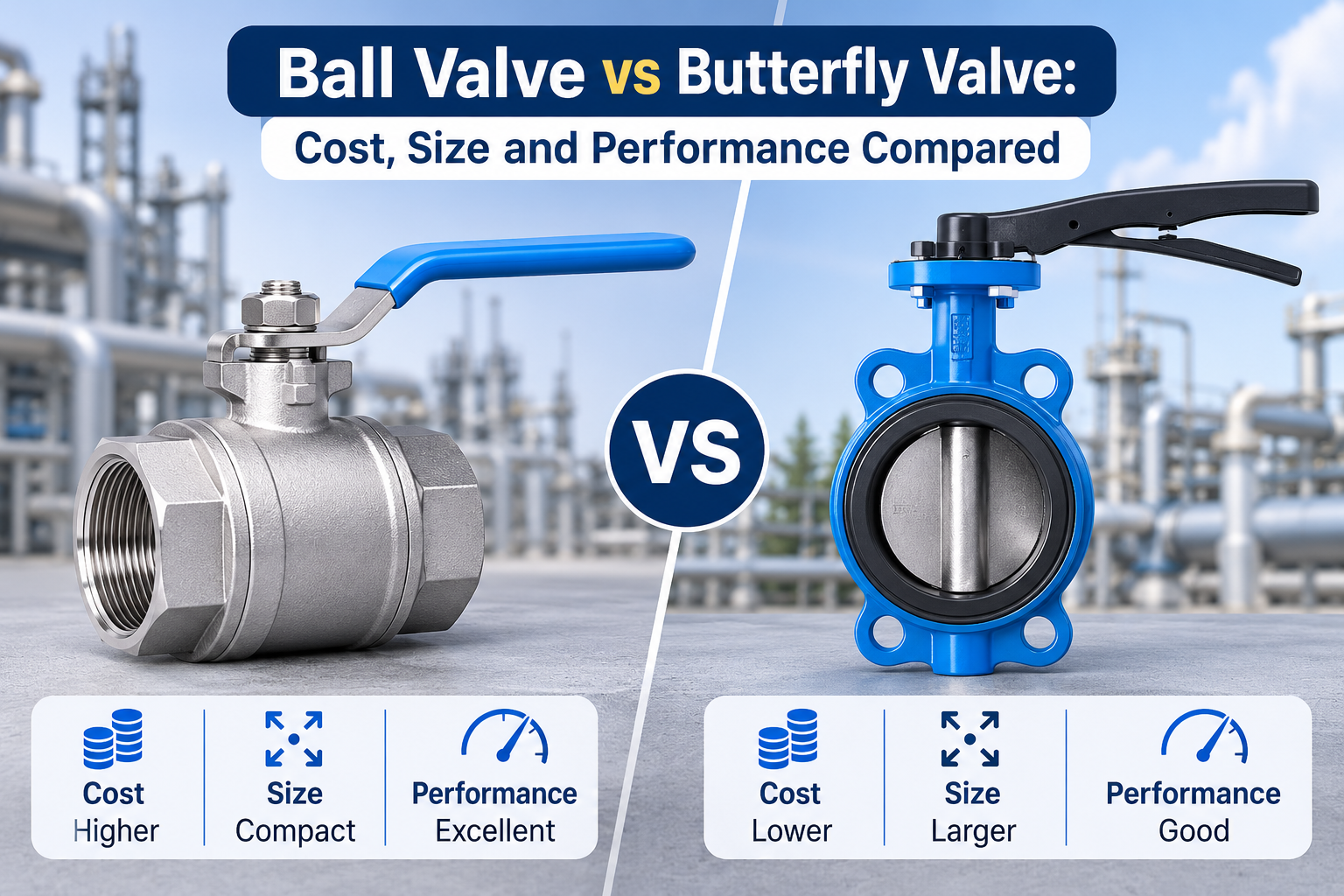
When the size of a pipeline reaches 8 inches, 12 inches or more, your choice of valve starts to affect your budget, plant room layout and even lifting plans. On Saudi water networks, desalination plants and district cooling systems, engineers are often faced with the same question: ball valve vs. butterfly valve, which one is better? Both are quarter-turn valves, but differ in weight, space, cost and pressure handling. The following will compare and contrast both valves to help you choose the correct valve for large water and HVAC lines. See full comparison on gate valve vs ball valve.
Ball Valve vs Butterfly Valve: An Overview
They both open and close with a 90-degree turn, so they’re fast and easy to use. The real difference is in the body of the valve.
In a ball valve, a solid ball is used to stop or allow the flow of process fluid, which results in a tighter shut-off and also has a good capability of handling high pressure. In contrast, a butterfly valve employs a disc which makes the valve body thin, particularly in large diameters, which in turn helps to decrease the cost and increase the economy of the valve.
How a Ball Valve Works
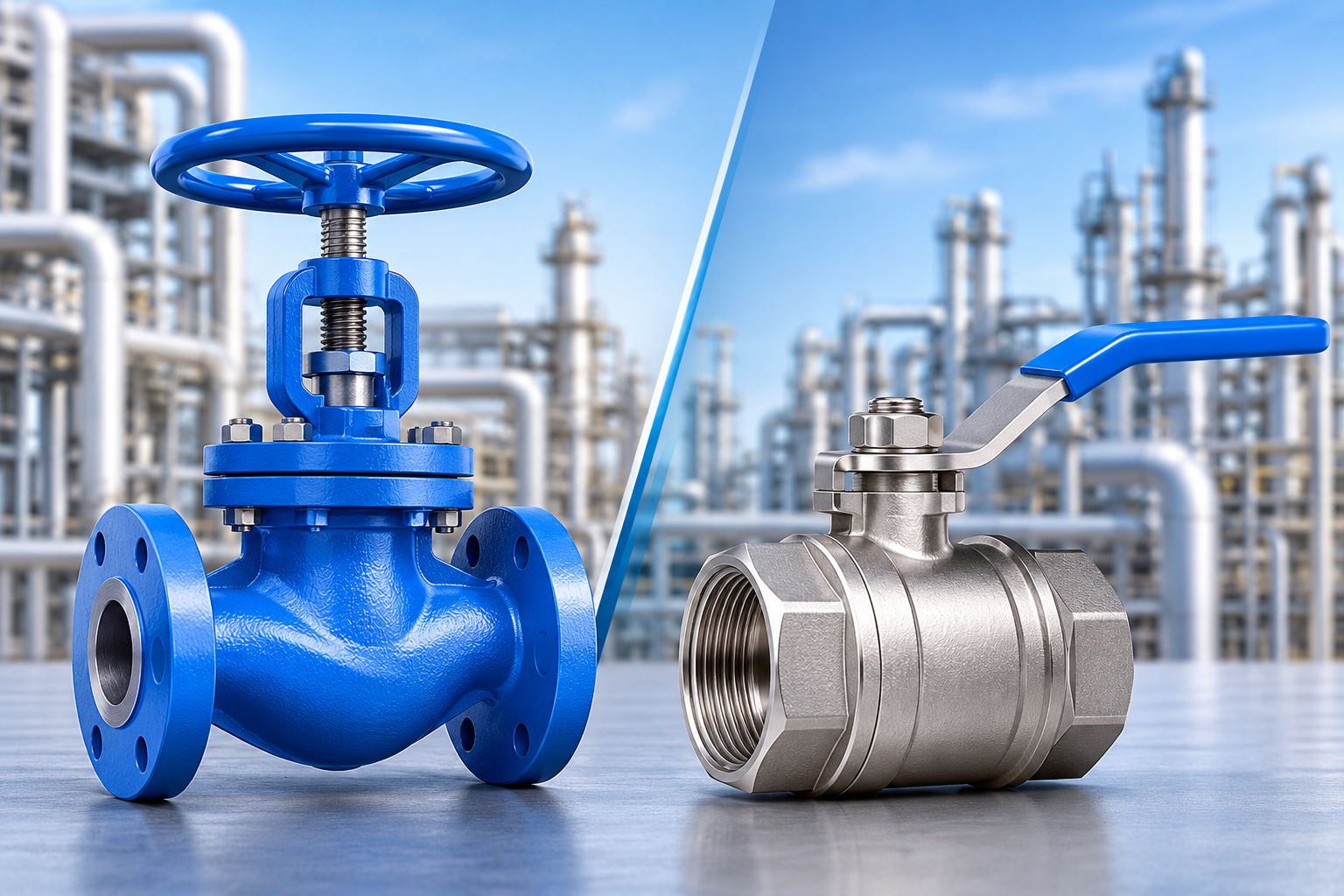
A ball valve relies on a drilled sphere to pass flow. As the handle is turned, the hole aligns with the pipe to allow the flow of the fluid. If the valve is turned another quarter turn, the solid side of the ball blocks the flow.
To make an even tighter seal, the ball is pressed against a soft seat. This makes ball valves a good choice for use with gas, fuel and other high pressure lines where even the smallest leak is unacceptable. Lets see how ball valve works. https://www.youtube.com/shorts/vot6ywrN9Y8
How a Butterfly Valve Works
A butterfly valve has a flat, round disc mounted on a central shaft. Turning the handle or gearbox rotates the disc. When the disc sits parallel to the flow, the valve is open; when it turns across the pipe, it presses against a rubber or metal seat and closes the line.
Because the disc is thin and the body is short, a butterfly valve takes up very little space. It can also be used for basic flow regulation in water and HVAC systems. Lets see how a Butterfly Valve Works. https://www.youtube.com/shorts/VOVsjaPOvDc
Ball Valve vs Butterfly Valve: Main Differences
| Feature | Ball Valve | Butterfly Valve |
| Closing element | Solid ball | Thin disc |
| Common size range | Small to medium | Medium to very large |
| Weight in large sizes | Heavy | Light |
| Installation space | Long body | Very compact (wafer/lug) |
| Shut-off | Very tight | Good to tight, depending on design |
| Pressure handling | High | Low to medium (higher with offset designs) |
| Pressure drop when open | Very low (full port) | Slight, as the disc stays in the flow |
| Cost in large sizes | High | Much lower |
Size Range and Weight
This is where the butterfly valve stands out. Butterfly valves are widely available in large diameters, from around 2 inches up to several metres, while staying surprisingly light. A large ball valve needs a heavy trunnion-mounted ball, which adds major weight, cost and handling effort.
For big water mains and chilled water headers, a lighter valve also means simpler supports, easier lifting and faster installation on site.
Pressure and Temperature Handling
Ball valves handle higher pressure and seal more tightly, so they lead in oil and gas and high-pressure lines. Standard resilient-seated butterfly valves suit low and medium pressure water and HVAC service.
For tougher conditions, double and triple offset butterfly valves offer better sealing and higher limits. In both types, hot service needs metal seats instead of soft seats.
Cost and Installation Space
In small sizes, the cost gap between the two is often small. As the pipe size grows, the butterfly valve becomes far more economical in both purchase cost and installation effort.
Space saving is another big advantage. A wafer or lug butterfly valve fits between two flanges with a very short face-to-face length. In crowded plant rooms, pump stations and rooftop HVAC areas, this compact design frees up valuable space and simplifies pipe routing.
Best Applications in Saudi Industries (water treatment, HVAC, oil & gas)
Water treatment and desalination: Butterfly valves are the usual choice for large intake lines, filter galleries and distribution mains, where big diameters and low weight matter most. Ball valves serve smaller chemical dosing and sampling lines.
HVAC and district cooling: Butterfly valves isolate chillers, cooling towers and main chilled water headers in commercial towers and malls. Ball valves fit smaller branches and fan coil unit connections.
Oil and gas: Ball valves lead in hydrocarbon, gas and high-pressure lines because of their tight shut-off. High-performance butterfly valves appear on large utility, cooling water and firewater lines. See our full blog on seamless pipe for oil and gas.
For smaller isolation points, you can also compare options in our guide on gate valve vs ball valve.
Get Ball Valves and Butterfly Valves from Shamry Trading
The right valve can save weight, space and cost across your entire pipeline. Shamry Trading supplies ball valves, butterfly valves, pipes and fittings for water, HVAC, industrial and oil and gas projects across Saudi Arabia. Our team helps you match each valve to your pipe size, pressure and application.
Contact us today and share your project requirements to find the right valve for every line.
Conclusion
Ball Valves are ideal for oil and gas service because they have a tight shut-off and can operate at higher pressures. Butterfly Valves are ideal for the same services as Ball Valves, however, they can not handle the same pressure. Butterfly Valves can be used for large pipelines because of their low cost and compact size. They also can be used for water/HVAC service.
Knowing the strengths of each valve allows for better design of pipelines and helps save space and money.
FAQs:
What is the butterfly valve vs ball valve difference?
A ball valve seals tighter and takes more pressure. A butterfly valve is lighter and cheaper in large sizes.
Is a butterfly valve for large pipes better than a ball valve?
Usually yes. It weighs less, saves space and costs less in big sizes.
What ball valve pressure rating is common for industrial lines?
It varies by size and class, but ball valves handle more pressure than standard butterfly valves.
Which valve is best for HVAC chilled water systems in Saudi Arabia?
Butterfly valves for main headers, ball valves for small branches.
Can a butterfly valve control flow?
Yes, it can handle basic flow control in water and HVAC lines.

One Response