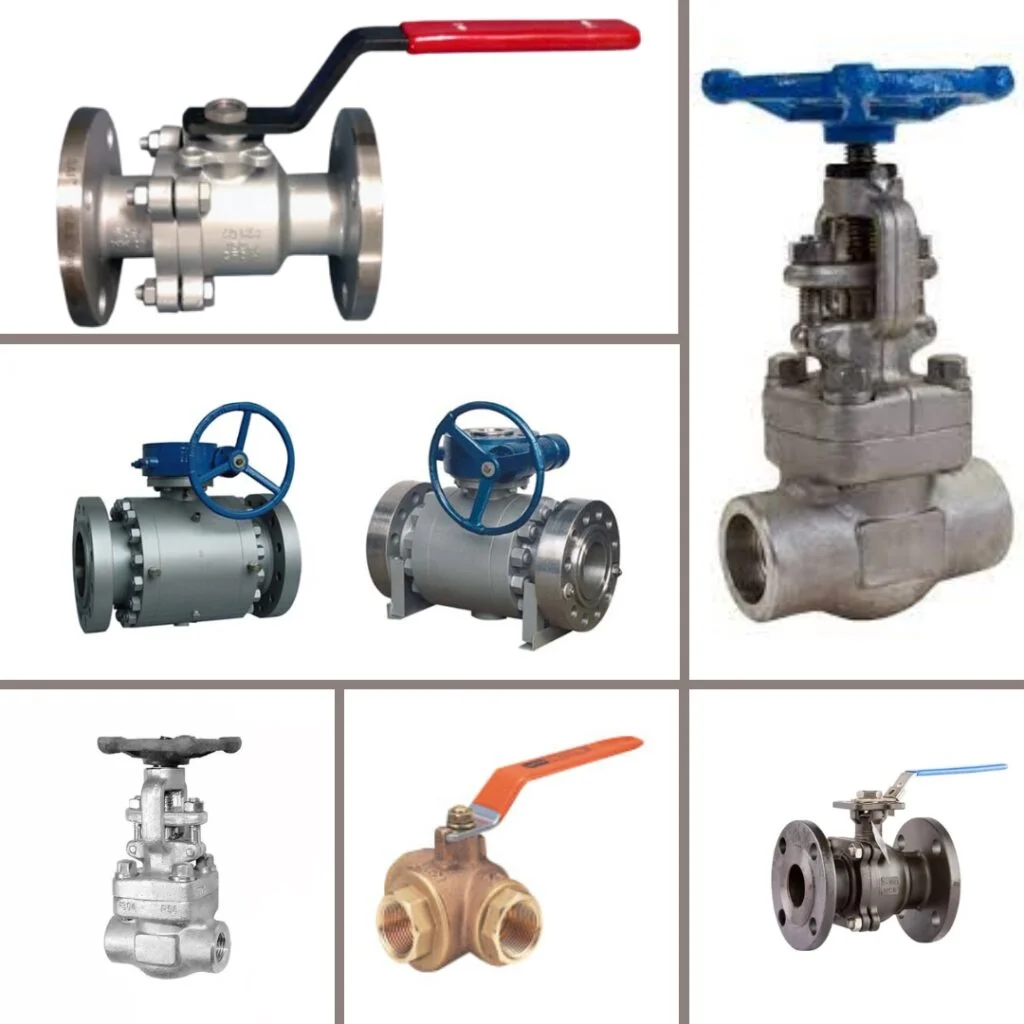
Have you ever placed a valve order for your project and then it breaks down in a few months due to Saudi Arabia’s weather — heat, sand or hard water? You’re not alone. The majority of contractors and business owners select valves based on the price alone without knowing that this can lead to leaks, pressure loss, and expensive downtimes. Knowing the types of valves (where each one is used and what it allows) can save time, money and repetitions of headaches on any project throughout the Kingdom. Visit our page if you want to buy any type of valve.
What Are the Main Types of Valves Used in Saudi Arabia?
Saudi Arabia’s industrial, residential, and commercial sectors rely on several core valve types, each built for a specific job. Knowing what each one does makes buying decisions far easier.
Ball Valve
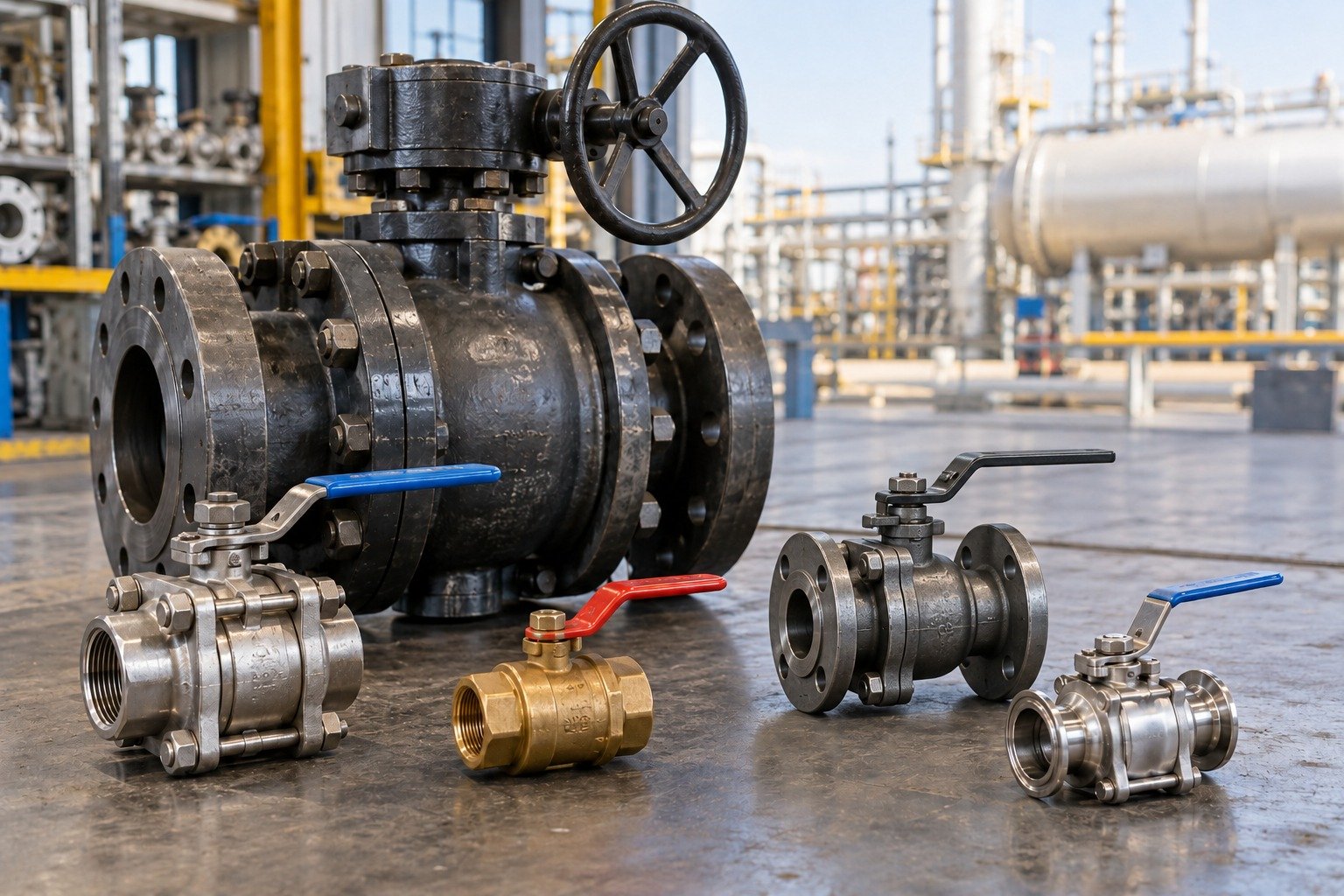
A ball valve uses a rotating ball with a hole through it to start or stop flow instantly. It’s a top choice for Saudi water supply lines and gas systems because it seals tightly and handles high pressure well. Quarter-turn operation also makes it fast and easy to use on busy job sites. Visit our page if you want to buy ball valve.
Globe Valve
A globe valve is built for regulating flow rather than just switching it on or off. It’s commonly used in Saudi industrial plants where flow needs fine adjustment, such as steam or chemical lines. Its design causes more pressure drop than a ball valve, but the control it offers is unmatched. Visit our page if you want to buy globe valve.
Control Valve
Control valves automatically adjust flow, pressure, or temperature based on system signals. In Saudi refineries, desalination plants, and large manufacturing facilities, they keep processes stable without constant manual intervention. This makes them essential for operations that can’t afford inconsistent output.
Y Strainer and Strainer Valve
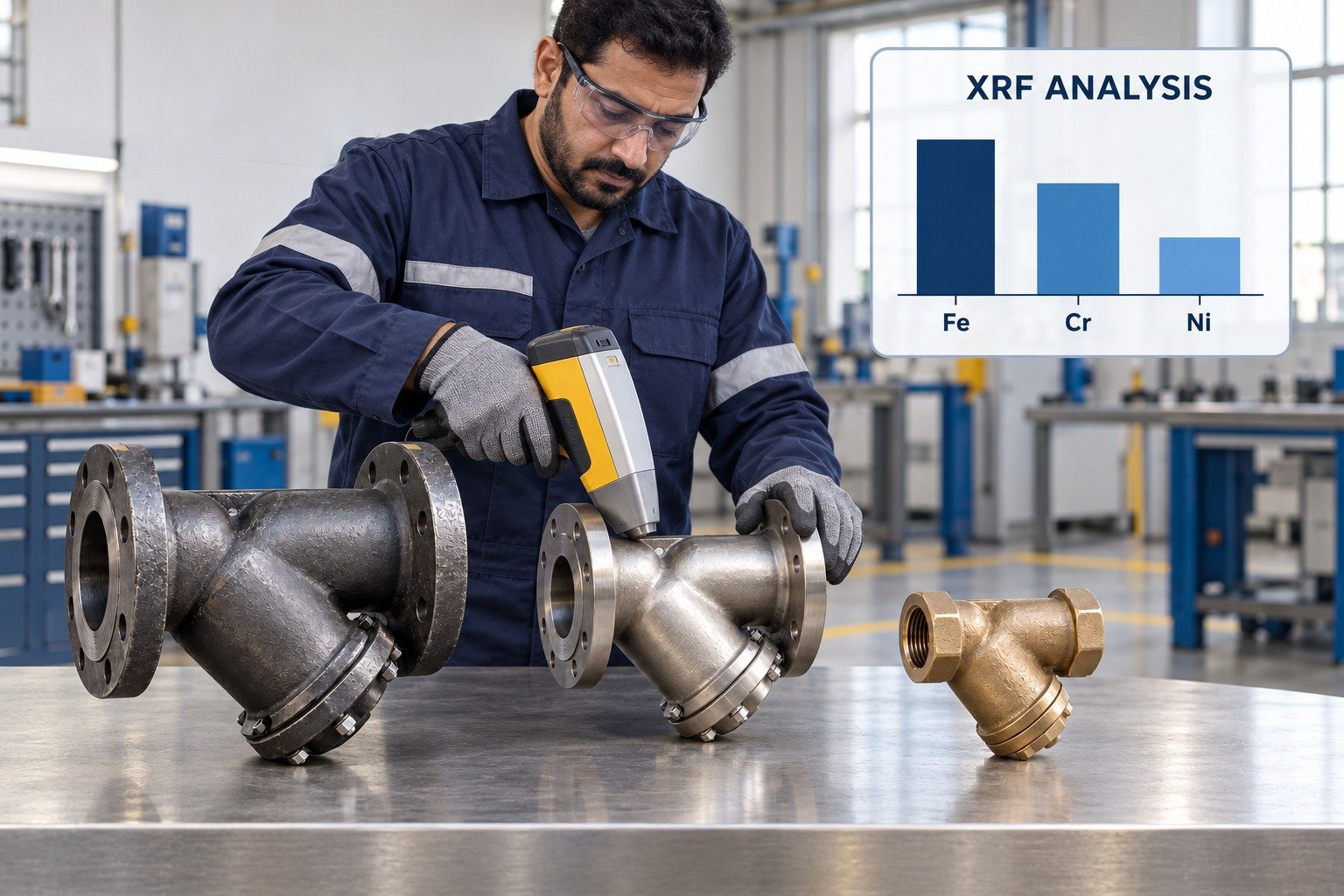
A Y strainer removes debris, sand, and sediment from pipelines before it reaches sensitive equipment like pumps or control valves. Given how much dust and sand exposure Saudi pipelines face, skipping a strainer valve often leads to premature equipment damage. Installing one is one of the cheapest ways to extend the life of your entire system. Vist our page if you want to buy y strainer.
Common Uses of Types of Valves in Saudi Arabia
Different valve uses in various sectors across Saudi Arabia. If the compression type acts like a gate for the water supply, ball valves quickly turn off water to homes and offices during repairs and emergencies. Globe and control valves are widely used in oil, gas, and petrochemical plants where small changes in output can jeopardize product quality. As another example, Y strainers are often used in desalination plants ahead of control valves to filter out sediment before it reaches sensitive machinery.
Spanning HVAC systems to fire safety lines that power Saudi Arabia’s expanding giga-projects, construction and infrastructure projects tie these valve types all together. Visit this page if you want to install HVAC system.
Benefits of Choosing the Right Types of Valves
Picking the correct valve for the job brings real, measurable advantages to any Saudi project.
Fewer leaks and less water loss: A properly matched valve seals better under local pressure and temperature conditions, cutting down water waste in a water-scarce country.
Lower maintenance costs: Valves rated for Saudi Arabia’s heat and sand exposure wear out slower, meaning fewer emergency repairs and less downtime.
Better system protection: A Y strainer placed ahead of control valves and pumps prevents sediment from damaging expensive equipment.
Improved process accuracy: Control valves give industrial operations precise, automated regulation, keeping output consistent in refineries and desalination plants.
Long-term cost savings: Quality valves may cost more upfront but reduce replacement frequency and repair bills over the project’s lifetime.
Buying Guide: What to Check Before Purchasing Valves in Saudi Arabia
Before buying, check the valve’s pressure and temperature rating, body material (stainless steel and brass work well locally), and compliance with standards like API and ANSI. Also check the traceability of products along with the supplier offering genuine products, as fake valves are a growing risk in local markets.
Selecting the right types of valves is critical for your project’s reliability, safety and total cost of ownership. If you need a ball valve to quickly shut off the pipeline, a control valve for precise metering or even just a Y strainer to protect downstream devices, using the correct type of valve in its real application saves you from failures later on. To get the right motive valve for your project, speak to a reliable company that is close to where you live.
Conclusion
The right sort of valves isn’t purely a technical deciding factor: it influences your project’s reliability, safety and also long run cost in Saudi Arabia. Each valve serves its own purpose from ball valves for fast shutoff to control valves for precision and Y strainers for protection. At Shamry Trading, we assist contractors and businesses from around the Kingdom to receive authentic, top-quality valves designed with practical local considerations — blindfolds are not needed; there is no danger of counterfeit. Contact us today, and let us help you find the specific valve that your project truly requires.
FAQs:
What are the main types of valves used in Saudi Arabia?
Ball, globe, control, and Y strainer valves — for shutoff, regulation, automation, and filtration.
Which valve suits Saudi Arabia’s heat and sand best?
Stainless steel or brass ball valves, paired with a Y strainer.
Ball valve or control valve — which one do I need?
Ball valve for quick shutoff, control valve for precise adjustment.
Why do valves fail quickly in Saudi Arabia?
Wrong valve type, poor material, or no strainer to catch sand.
Where can I buy genuine valves in Saudi Arabia?
Shamry Trading — contact us to find your exact fit.



2 Responses