
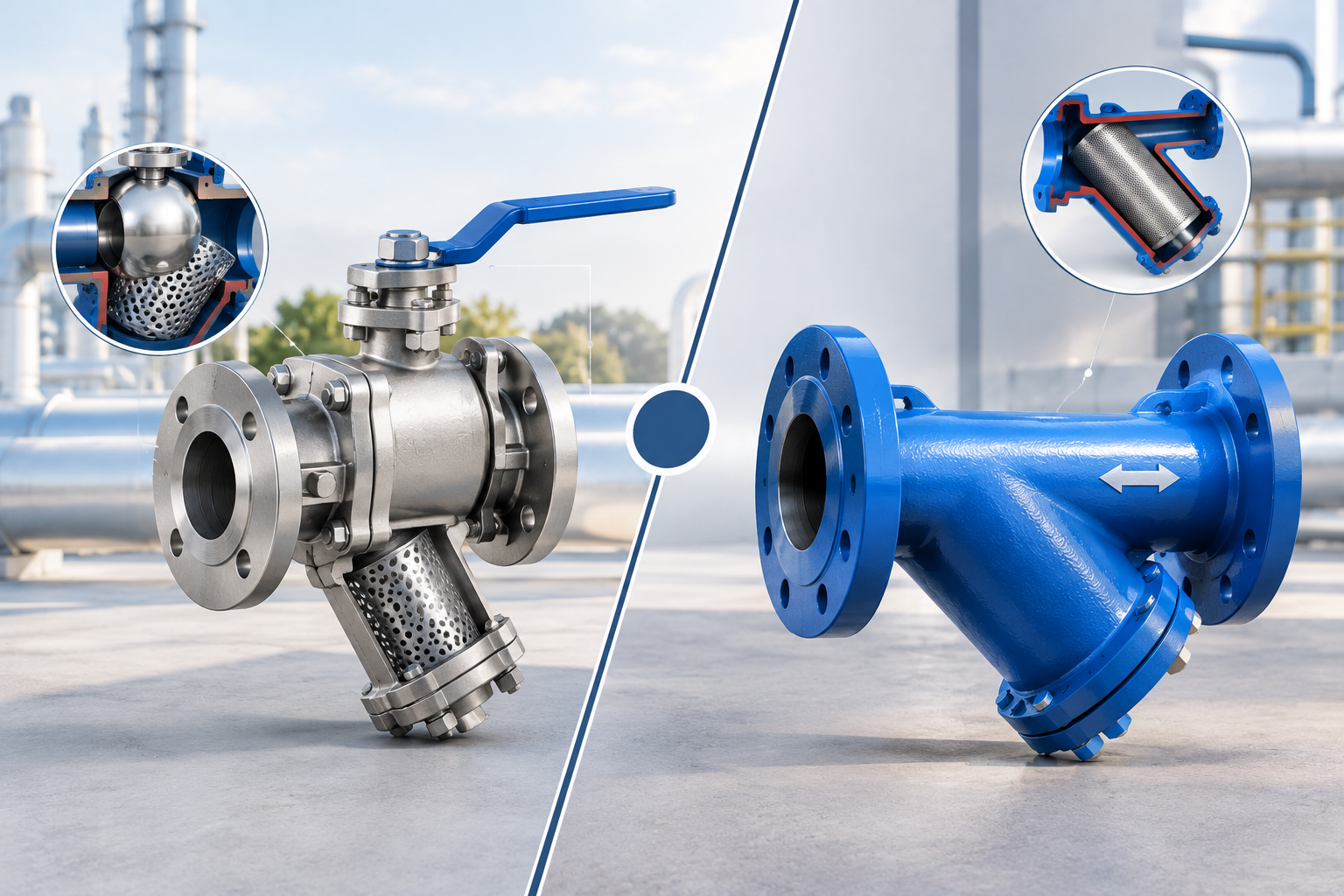
A blocked strainer can slow a chiller line, starve a pump or damage a control valve, and the cause is often a filter that was wrong for the job from the start. On Saudi industrial and commercial sites, sand, scale and pipe debris move through water and HVAC systems every day. That makes the choice of strainer an important one. Two common options are a ball valve with strainer and a standalone Y type strainer. This guide explains how each one works, where each performs best and how to choose the right one for your project. Visit our page if you want to buy ball valve with strainer.
Ball Valve with Strainer vs Y Type Strainer: Key Differences
| Feature | Ball Valve with Strainer | Y Type Strainer |
| Function | Shut-off + filtration | Filtration only |
| Typical sizes | Small diameters | Small to large diameters |
| Connections | Mostly threaded | Threaded or flanged |
| Dirt-holding capacity | Lower | Higher |
| Installation space | Compact | Needs more space |
| Best for | HVAC terminals, meters, small lines | Main lines, pumps, process systems |
Space and Installation
A ball valve with strainer saves space and reduces the number of joints, which lowers possible leak points. This helps in tight ceiling voids and plant rooms in commercial towers.
Filtration and Maintenance
A Y type strainer has a larger screen area and holds more debris before it clogs. On dirty lines or main headers, this means fewer cleaning stops and steadier flow.
Ball Valve with Strainer vs Y Type Strainer: Which One Should You Choose?
There is no single winner. The right choice depends on your line size, debris load and system design.
Choose a ball valve with strainer if:
- The line is small and space is tight, such as in ceiling voids or plant rooms
- You need isolation and filtration together at HVAC terminals or water meters
- You want fewer fittings, faster installation and quick screen access
Choose a Y type strainer if:
- The pipeline is large or carries heavy debris
- You need flanged connections or higher pressure ratings
- The system protects pumps, control valves, heat exchangers or process equipment
Whichever you choose, confirm the mesh size, pressure rating and body material against your system design before ordering.
Get the Right Valve and Strainer with Shamry Trading
Choosing between a ball valve with strainer and a Y type strainer is easier with the right guidance. Shamry Trading supplies valves, strainers, pipes and fittings for commercial and industrial projects across Saudi Arabia. Our team helps engineers and contractors match the right product to each line, pressure and application.
Call us at +966 545604737 or visit our Riyadh office in Al Malaz to discuss your project requirements.
Conclusion
A ball valve with strainer works best on compact, small-diameter lines that need shut-off and filtration together. A Y type strainer is the better choice for larger pipelines, heavy debris and critical equipment. For major lines, a y strainer with ball valve setup gives you the best of both.
Not sure which one fits your system? Contact Shamry Trading today, and our team will help you choose the right strainer for your project.
FAQs:
Can a ball valve with strainer replace a Y type strainer?
Only on small lines with light debris. Large or dirty lines need a Y type strainer.
How often should a ball valve strainer be cleaned?
Every 3–6 months on most Saudi sites, and more often before the summer cooling season.
Why do engineers install a Y strainer with ball valve?
The ball valve isolates the line, so the strainer can be cleaned safely.
Which is better for HVAC systems in Saudi Arabia?
A ball valve with strainer for fan coil units, and a Y type strainer for chiller mains and pumps.
What happens if a strainer is not cleaned on time?
Flow drops, pumps work harder, and equipment can get damaged.

One Response