
Every piping system carries more than just water or fluid. Rust flakes, sand, welding slag, and small bits of debris travel along with the flow. Over time, this dirt can damage pumps, block valves, and cut the life of expensive equipment. A y type strainer is one of the simplest ways to stop that from happening.
In this guide, we explain what a y type strainer does, where it is used, and what to check before you buy one for your project in Saudi Arabia. Visit our page if you want to buy y type strainer.
What Is a Y Type Strainer?
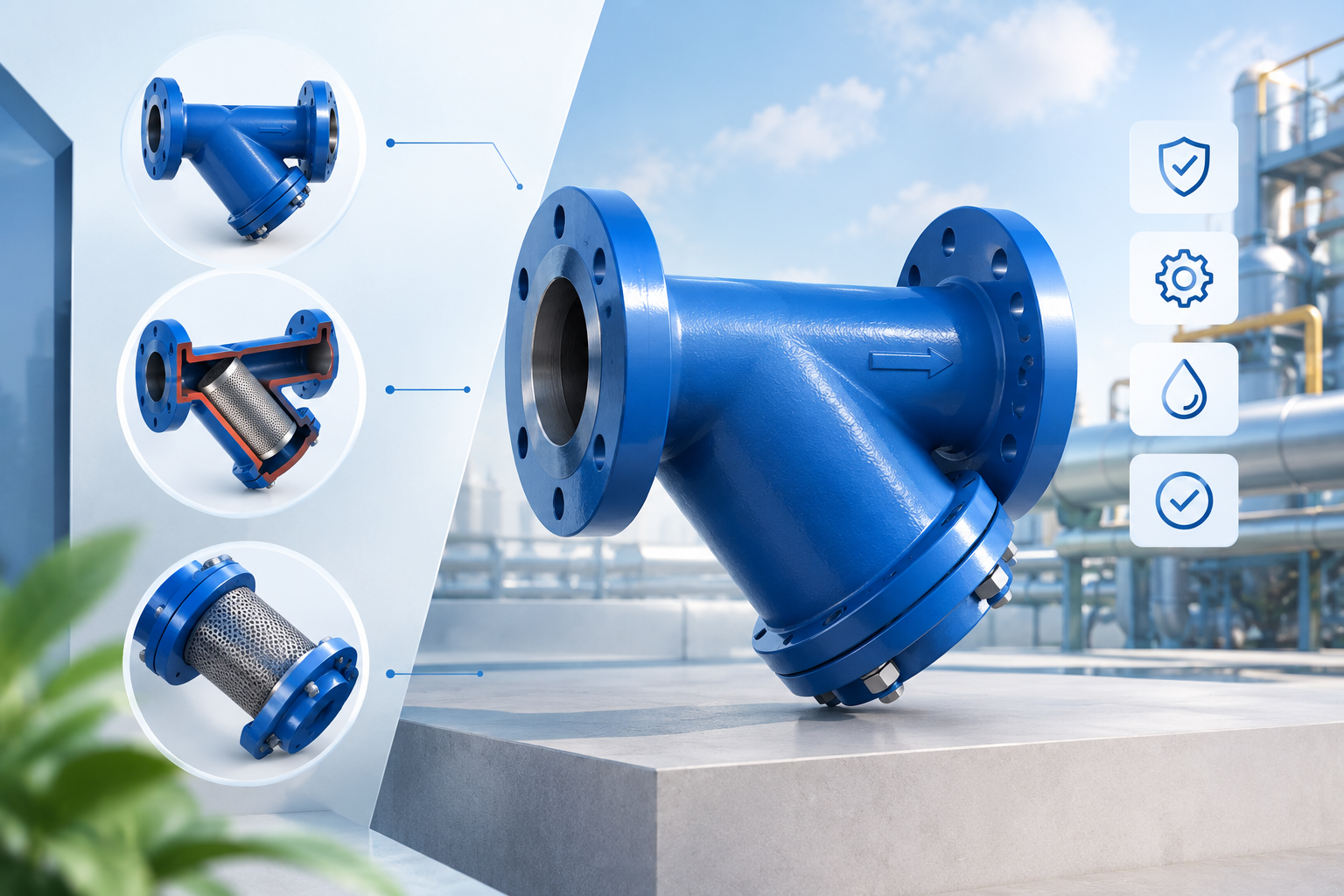
A y-type strainer is an in-line device that filters out solid matter from liquids, gases and/or steam. Its shape gives it its name. The main body goes straight ahead, and then a short branch comes off at an angle. Therefore, the entire device resembles the letter “Y.”
The inside of that angled branch has either a mesh or perforated screen. Fluid can pass through the screen while keeping debris on the other side. Some people refer to this device as a y strainer valve; however, unlike most valves which are used to control the flow of fluid by opening and closing the line, this device is solely for filtering.
How Does a Y Type Strainer Work?
The working idea is simple. Fluid enters the inlet and flows into the angled screen chamber. The screen catches any solid particles bigger than its mesh size. Clean fluid then moves out through the outlet and carries on down the line.
The debris collects at the bottom of the screen. Most units have a cap or a blow-off connection on the branch. You can open it to flush out the dirt or pull out the screen for cleaning, often without cutting the pipe.
Because of its compact design, a y type strainer handles high pressure well and fits in tight spaces where a bigger strainer filter would not.
Y Type Strainer vs Other Strainer Options
A y type strainer is not the only choice. Here is how it compares with a few common alternatives:
- The ball valve with strainer is a single body that includes both a shut-off valve and a strainer. Although this type of valve provides savings on space in smaller line systems, it is generally restricted to use in smaller size applications and low-demand operations.
- Foot Valve with Strainer: A foot valve with strainer is used as an intake device for pumps. It can be found at the lowest point of a suction line in either a water storage tank or well. The main purpose of this type of valve is to prevent large amounts of debris from entering into the pump and to allow the pump to stay primed by preventing any backward flow of water.
- Basket Strainer – Has larger capacity than other types of strainers, therefore can hold more debris. It also requires more room for installation. This type of strainer is generally used in low-pressure, high-flow applications.
For most industrial and building lines, the y type strainer gives the best balance of size, pressure rating, and cost.
Where Is a Y Type Strainer Used?
You will find this pipe strainer in almost every sector that moves fluid:
- Water supply and plumbing networks
- HVAC and chilled water systems
- Steam lines and boiler feed systems
- Oil, gas, and petrochemical plants
- Fire fighting lines
- Pump and meter protection
In Saudi Arabia, where many projects deal with hard water and sand, a good strainer filter before pumps and control valves can save a lot of repair cost.
How to Choose the Right Y Type Strainer
Picking the wrong unit leads to pressure loss or fast clogging. Check these points before you order:
1. Body material. Cast iron suits water and general services. Carbon steel works well for higher pressure and temperature. Stainless steel is the right pick for corrosive fluids or hygiene-sensitive lines.
2. End connection. Choose threaded ends for small pipes, and flanged or socket weld ends for larger and high-pressure lines.
3. Mesh size. A finer mesh catches smaller particles but clogs faster. Match the screen to how clean your fluid actually needs to be.
4. Pressure and temperature rating. Always pick a y strainer valve rated above your system’s maximum working conditions.
5. Pipe size. The strainer should match your line size so flow is not choked.
Installation and Maintenance Tips
Install the y type strainer with the flow arrow pointing in the correct direction. In horizontal water lines, keep the screen branch facing downward so dirt settles in the right place. In steam lines, turn the branch to the side to stop condensate from building up.
Check the pressure drop across the strainer regularly. When it rises, the screen is getting blocked and needs a clean. A simple cleaning routine keeps your pipe strainer working for years.
Buy Y Type Strainer in Saudi Arabia from Shamry Trading
At Shamry Trading, we supply quality pipes, valves, and fittings in iron and steel for plumbing, industrial, and construction projects across Saudi Arabia. Our range includes the y type strainer, y strainer valve, and other pipe strainer options in different sizes, materials, and pressure ratings.
Not sure which unit fits your line? Share your pipe size, fluid type, and working pressure with our team, and we will help you pick the right strainer filter for the job.
Contact Shamry Trading today for a quick quote on your y type strainer needs.
FAQS
1. What is a Y type strainer?
A Y-shaped pipe fitting with a mesh screen that removes debris from fluid.
2. What are the key differences between a T strainer and a Y strainer?
A T strainer suits high-flow, low-pressure lines, while a Y strainer handles high pressure.
3. How does a Y-strainer work?
Its mesh screen traps solid particles while clean fluid flows out the outlet.
4. What is the difference between a Y type strainer and a basket type strainer?
A Y strainer is compact for high pressure, while a basket strainer holds more debris.

3 Responses