Choosing the right industrial pipe can feel like a high-stakes decision. In the ongoing discussion of seamless vs welded pipe, making the wrong choice can impact project timelines, budget, and most importantly, operational safety. For anyone working in engineering, construction, or procurement, understanding the fundamental differences between these two types of black steel pipes is not just helpful—it’s essential. See full information about black steel pipe.
This guide provides a clear breakdown of each pipe type, from their core characteristics to their manufacturing origins, helping you make an informed decision for your next project.
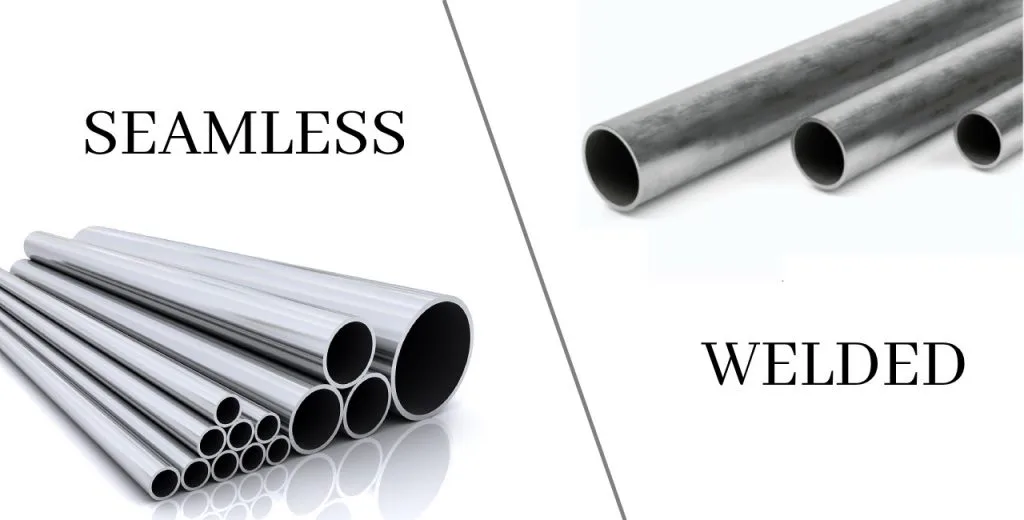
Welded Pipe
A welded pipe, often categorized as an ERW pipe (Electric Resistance Welded), begins its life as a flat steel plate. This plate is rolled into a tube, and the two edges are fused together to form a longitudinal seam. Modern welding techniques, particularly high-frequency welding, have made this seam exceptionally strong and reliable. For order ERW black steel pipe.
Because it is formed from a pre-flattened sheet, welded pipe boasts remarkable consistency in its wall thickness and overall dimensions, making it a popular and predictable choice for many applications.
Key Characteristics:
- Seamed Construction: A visible weld line runs along the pipe’s length, marking where the steel was joined.
- Dimensional Accuracy: Offers highly uniform wall thickness and a smooth surface finish.
- Cost-Effective Production: The manufacturing process is efficient, making welded pipes a more affordable option.
Common Applications:
Welded pipes are a go-to material for a vast range of low-to-medium pressure applications. They are commonly used for transporting water and other fluids, structural components in buildings, fencing, and general-purpose plumbing systems where extreme pressures are not a factor.
Seamless Pipe
A seamless pipe is exactly what its name implies—a single, solid piece of steel with no seams or joints. It is forged from a solid, cylindrical piece of steel known as a billet, which is heated and pierced to create a hollow tube. See full information about seamless pipe.
The absence of a weld seam eliminates any potential weak point, giving it superior structural integrity. The debate of ERW vs seamless pipe often comes down to strength, and seamless pipe excels in this area. Its uniform strength makes it the premier choice for applications involving high pressure, high temperatures, and corrosive materials. If you wish to see the comparison of ERW vs seamless pipe visit our page.
Key Characteristics:
- No Seams or Joints: The pipe’s body is a continuous extrusion of steel, ensuring uniform strength.
- Superior Pressure Rating: Capable of withstanding significantly higher pressure, stress, and vibration.
- Enhanced Durability: Offers greater resistance to corrosion and mechanical stress.
Common Applications:
Seamless pipes are indispensable in critical industries where system failure could have catastrophic consequences. They are the standard for oil and gas exploration and drilling, power plants, chemical refineries, and high-performance hydraulic equipment. When safety and reliability are paramount, seamless is the clear choice.
Seamless vs Welded Pipe
This table offers a side-by-side look at the key distinctions to help guide your purchasing decision.
| Feature | Welded Pipe (ERW) | Seamless Pipe |
| Basic Structure | Made from a rolled plate with a longitudinal weld. | Extruded from a solid billet with no seam. |
| Pressure Capacity | Lower; suitable for low to medium pressure. | Higher; ideal for high-pressure and high-stress. |
| Cost | More economical and budget-friendly. | More expensive due to a complex manufacturing process. |
| Wall Thickness | Highly consistent and uniform. | May have slight inconsistencies. |
| Primary Advantage | Cost & Uniformity: Excellent for general use. | Strength & Reliability: Essential for critical jobs. |
| Common Uses | Water lines, structural applications, fencing. | Oil & gas, power generation, hydraulic cylinders. |
How Seamless vs Welded Pipe Are Made
The performance differences between welded and seamless pipes are a direct result of their unique manufacturing methods.
The Welded Pipe Process
The creation of a welded pipe is a streamlined, efficient process.
- Forming: A coil of flat steel is unrolled and passed through a series of rollers that progressively shape it into a round tube.
- Welding: The edges of the tube meet and are heated to a forging temperature by a high-frequency electric current. They are then pressed together, creating a strong bond without any filler material.
- Finishing: The excess weld material (flash) is trimmed from the inside and outside surfaces. The pipe is then sized and cut to its final length.
The Seamless Pipe Process
Creating a seamless pipe is a more intensive, hot-working process.
- Heating: A solid steel billet is heated in a furnace until it becomes malleable.
- Piercing: The glowing-hot billet is rotated and forced over a piercing point (a mandrel), which hollows out its center.
- Elongating: The resulting hollow shell is then passed through rollers that stretch and thin it, forming the final dimensions of the pipe.
- Finalizing: The pipe is cooled, straightened, and finished to meet precise specifications.
Seamless vs Welded Pipe: Which Should You Choose?
The decision in the seamless vs welded pipe debate boils down to the specific demands of your project. There isn’t a single “better” option, only the right pipe for the job. To make the best choice, consider the following factors.
Choose a Seamless Pipe if:
Your project requires maximum strength and reliability under intense conditions. Opt for a seamless pipe when:
- High Pressure is a Factor: The application involves transporting fluids or gases under significant pressure or at very high temperatures.
- Corrosion is a Concern: The material being transported is corrosive, and you need to minimize potential weak points where rust could form.
- Failure is Not an Option: In critical systems, such as hydraulic lifts or high-pressure fuel lines, the superior structural integrity of a seamless pipe provides essential peace of mind.
- You’re Using Smaller Diameters: For smaller pipe sizes, the cost difference between seamless and welded is less pronounced, making it a worthwhile investment for added security.
Choose a Welded (ERW) Pipe if:
Your project is more focused on cost-effectiveness and versatility for standard applications. A welded pipe is the ideal choice when:
- Budget is a Key Consideration: Welded pipes offer significant cost savings, especially for large-scale projects or when you need pipes with a very large diameter.
- The Application is Low-to-Medium Pressure: For tasks like water transport, structural supports, or low-pressure gas lines, modern welded pipes provide more than enough strength and reliability.
- Large Diameters are Necessary: The manufacturing process for welded pipes allows for much larger sizes than are typically available for seamless pipes.
- The Use is Structural: For construction frameworks, fencing, or other structural purposes, the strength and consistency of welded pipe are perfectly suitable and economical.
Where to Buy these Pipes
Choosing the right material is only half the battle; you also need a trustworthy supplier. If your project demands high-quality seamless pipe or cost-effective ERW pipes, finding an expert partner is key.
At Shamry Trading, we provide a wide range of industrial piping solutions, including various grades of black steel pipes. Our team is dedicated to helping you select the perfect material that aligns with your project’s specifications and budget. Contact us today for a consultation and ensure your project is built with quality and precision.
Conclusion
Ultimately, the right choice in the seamless vs welded pipe decision rests on your application’s specific demands. For structural projects and low-pressure fluid transport where budget is a key consideration, welded pipe is an excellent and reliable option. For high-pressure, high-temperature, or critical-safety systems, the superior strength and integrity of seamless pipe make it a necessary investment.Always consult with your project’s engineering standards to confirm that the material you choose meets all required safety and performance criteria. Contact Shamry Trading for Your Piping Needs
FAQS
1. What is the pressure rating difference between seamless and welded pipes?
Seamless pipes generally have a higher pressure rating due to their uniform structure.
2. What is the size difference between seamless and welded pipes?
Seamless pipes offer more consistent size and fewer imperfections than welded pipes.
3. What is a seamless pipe?
A seamless pipe is made from a solid billet without any welding, offering uniform strength.
4. What is the cost difference between seamless and welded pipes?
Seamless pipes are more expensive due to the manufacturing process, while welded pipes are cheaper.
5. What is the difference between seamless and welded pipes?
Seamless pipes are made from a solid billet, while welded pipes are made by welding steel sheets together.
6. What is the difference between seamless pipe and ERW pipe?
Seamless pipes are stronger and more durable, while ERW pipes are cheaper and easier to produce.
7. What does welded pipe mean?
A welded pipe is made by joining metal sheets or plates using welding methods, such as ERW or spiral welding.
8. What is the difference between seam and seamless pipe?
Seam pipes have a welded seam, while seamless pipes are continuous without any joint.